
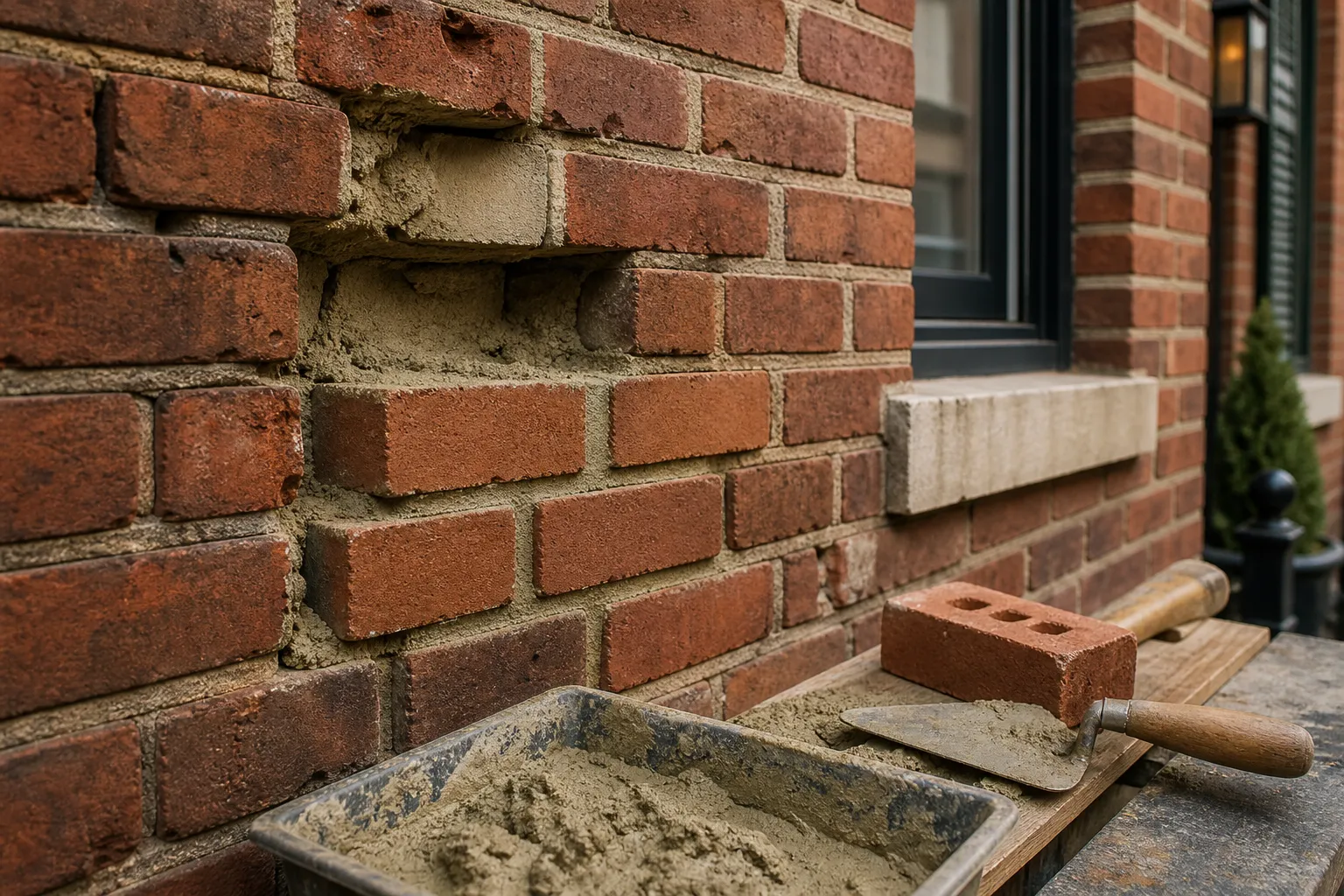
Can You Repair Damaged Bricks Without Replacing the Entire Wall?
In most cases, yes. Damaged, cracked, or spalling individual bricks can be cut out and replaced one at a time, or in small clusters, without touching the rest of the wall. This is one of the most common questions homeowners search on forums like Reddit's home improvement communities, usually after noticing one or two bad bricks and worrying the whole wall is at risk. A full wall replacement is only necessary when the underlying structure has failed, when damage has spread across a large percentage of the wall, or when the wall has significant water damage behind the brick veneer rather than just surface-level issues.
How Spot Brick Repair Works
Spot repair, sometimes called brick replacement or brick splicing, involves carefully removing the mortar around a damaged brick, extracting the brick without disturbing surrounding units, and setting a new, matching brick in its place with fresh mortar. A skilled mason can do this on individual bricks scattered across a wall or in a small cluster without any visible disruption to the rest of the structure. The key to a seamless repair is matching the size, color, and texture of the replacement brick closely enough that it doesn't stand out, which is why experienced DC masonry contractors often keep or source reclaimed brick specifically for older homes.
When Spot Repair Is the Right Choice
- A small number of bricks are cracked, spalling, or missing chunks, but the surrounding wall is structurally sound.
- The damage is isolated to one area rather than spread across the entire wall.
- The wall shows no signs of bulging, leaning, or separation from the structure behind it.
- You want to preserve as much of the original, weathered brick as possible for historic or aesthetic reasons.
- Budget is a factor and the damage doesn't justify the cost of a full rebuild.
When You Actually Need More Than Spot Repair
There are situations where trying to patch individual bricks isn't enough. If more than roughly 20 to 25 percent of a wall section shows damage, spot repairs start to become more expensive and less structurally reliable than simply rebuilding that section. Walls that are visibly bulging, leaning, or separating from the building behind them indicate a structural failure that spot repair won't fix, since the problem isn't the brick itself but what's happening behind it. Similarly, if water damage has spread behind the brick veneer into the wall cavity, addressing only the visible brick without dealing with the underlying moisture problem will lead to repeat damage within a year or two.
How a Contractor Decides Between Spot Repair and Wall Rebuild
A qualified masonry contractor will inspect not just the visibly damaged bricks but also tap surrounding bricks to check for hollow sounds (a sign of detachment), examine mortar joints throughout the wall for consistency, and check for any bulging or movement. They may also ask about the history of the wall, such as previous water leaks, prior repairs, or known settling issues, since these details help determine whether visible brick damage is an isolated problem or a symptom of something larger happening within the wall structure.
Cost Comparison: Spot Repair vs. Full Wall Replacement
Spot repair of a handful of bricks typically costs $400 to $1,200, making it by far the more economical choice when it's a viable option. A full wall section rebuild, by comparison, can run several thousand dollars depending on size, scaffolding needs, and brick matching requirements. This cost difference is exactly why an accurate diagnosis matters: replacing an entire wall when spot repair would have worked wastes significant money, while under-repairing a wall with hidden structural issues just delays a more expensive fix.
What Homeowners on Reddit and Forums Usually Get Wrong
This question comes up constantly in home improvement forums, and a common mistake in the discussion is assuming that any visible brick damage automatically means the whole wall is compromised. In reality, brick veneer and load-bearing brick walls are both designed with a fair amount of redundancy, and losing a small number of bricks to weathering or impact damage rarely threatens the structure as a whole. The opposite mistake also shows up often: homeowners patch a damaged brick with mortar or filler instead of properly replacing it, which looks fine short term but doesn't address water intrusion the same way a full brick replacement does, and often needs to be redone within a year or two.
How to Find a Contractor Comfortable with Small Repair Jobs
Some masonry contractors focus primarily on larger commercial or full-restoration projects and may not prioritize small spot repairs. When calling around, be upfront that you're looking for individual brick replacement rather than a larger project, and ask whether they keep or can source brick that matches older DC homes. A contractor who's genuinely experienced with residential spot repair should be able to give you a straightforward estimate after a quick visual inspection, often within the same visit.
Preventing Future Brick Damage After a Spot Repair
Once a damaged brick has been replaced, a bit of preventive care helps avoid repeat issues nearby. Keep an eye on the surrounding bricks for early signs of spalling or cracking, since whatever caused the original damage, whether water exposure, impact, or freeze-thaw stress, may still be affecting neighboring units. Make sure gutters and downspouts aren't directing water at that section of wall, and avoid stacking firewood, planters, or other materials directly against brick, since trapped moisture behind these items is a common cause of localized brick damage over time.
Frequently Asked Questions
Can a single cracked brick be replaced without redoing the whole wall?
Yes, an individual damaged brick can typically be cut out and replaced with a matching brick without affecting the rest of the wall, as long as the surrounding structure is sound.
How many damaged bricks is too many for spot repair?
As a general guideline, once damage affects more than about 20 to 25 percent of a wall section, a full rebuild of that section often becomes more cost-effective than patching individual bricks.
Will a spot-repaired brick match the rest of the wall?
A skilled mason using properly matched brick color, size, and texture can make spot repairs nearly invisible, though slight weathering differences may be noticeable up close initially and fade over time.
Does spot repair fix the underlying cause of brick damage?
Not on its own. If water intrusion, drainage issues, or structural movement caused the original damage, that root cause needs to be addressed as well, or new damage will likely appear.
Is spot brick repair a DIY-friendly project?
It's possible for a confident DIYer with the right tools, but removing a brick without damaging surrounding units and matching mortar correctly takes practice, so many homeowners choose to hire a professional.
How long does spot brick repair take?
Repairing a handful of bricks typically takes a few hours to a full day, depending on how many bricks need replacement and mortar cure time.
Can spot repair be done on a historic DC brick home?
Yes, and it's often preferred for historic homes since it preserves more of the original brick and character compared to a full wall rebuild.
Get a Free Quote
Talk to a local DC masonry expert about your project — no pressure, no obligation.