
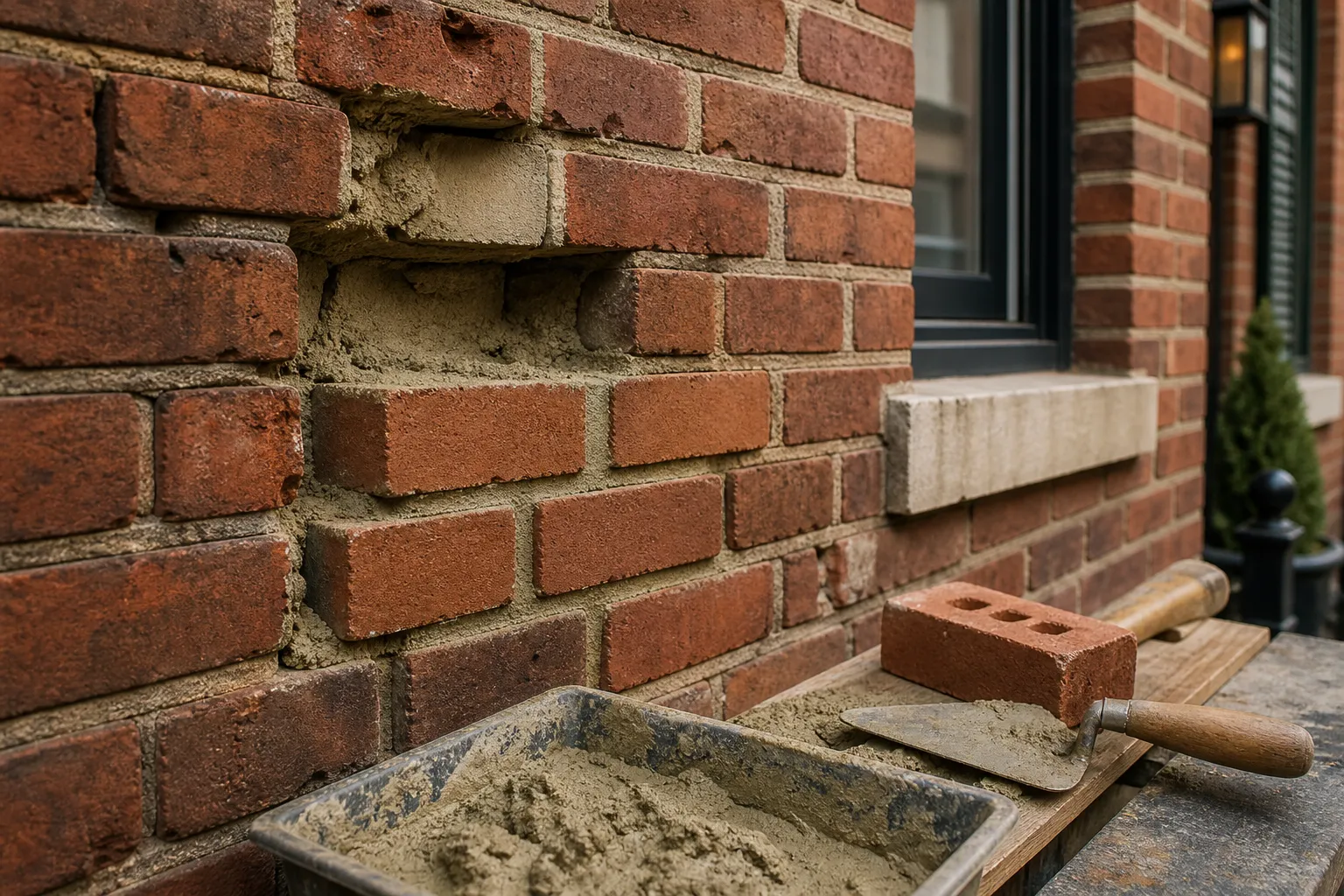
7 Signs Your Brick Home Needs Masonry Repair Before Winter
The clearest signs your brick home needs repair before winter are crumbling mortar joints, white powdery efflorescence, flaking or spalling brick, gaps around window and door frames, damp smells near exterior walls, leaning or bulging sections of brick, and a damaged chimney crown. Any one of these on its own is worth having inspected, but several appearing together usually means water has already gotten into the masonry and freeze-thaw damage will accelerate once temperatures drop. Washington, DC's winters bring repeated freezing and thawing that turns small, cheap-to-fix issues into expensive structural repairs, which is why fall is the best time to catch these signs.
7 Signs Your Brick Home Needs Masonry Repair
1. Crumbling or Missing Mortar Joints
Mortar is the weakest part of any brick wall by design, meant to wear out before the brick itself does. When you can scrape mortar out of the joints with a finger or a key, or you notice gaps where mortar used to be, water has an open path into the wall. Left through a DC winter, that water freezes and expands, which can crack the bricks on either side of the joint.
2. White, Powdery Efflorescence on the Brick Surface
Efflorescence is the chalky white residue that appears when water moves through brick and evaporates, leaving mineral salts behind. It's a clear sign that moisture is passing through your walls, and while the residue itself isn't structurally damaging, the water causing it often is, especially once winter freezing begins.
3. Spalling Brick (Flaking or Peeling Surfaces)
Spalling happens when trapped moisture inside a brick freezes, expands, and pushes the outer face of the brick off in flakes or chunks. Once a brick starts spalling, the exposed inner material absorbs water even faster, so the damage accelerates each winter until the brick is replaced.
4. Gaps Around Window and Door Frames
Small gaps between brick and window or door trim let in both water and cold air. Beyond the masonry concern, these gaps drive up heating costs in the winter and can lead to wood rot in the surrounding frame if left unsealed.
5. Damp or Musty Smell Near Exterior Walls
If a room near an exterior brick wall has developed a persistent musty smell, moisture is likely getting through the masonry and into the interior wall cavity. This is one of the less obvious signs but often points to more advanced water intrusion than surface cracking alone.
6. Leaning, Bulging, or Bowing Brick Sections
A wall section that appears to lean outward or bulge is one of the more serious signs on this list, often indicating the wall has separated from its structural backing or that water damage has compromised the wall's integrity over time. This should be inspected promptly rather than waiting for a routine seasonal check.
7. Damaged or Missing Chimney Crown
The chimney crown is the concrete or mortar cap at the very top of the chimney, and it takes the brunt of DC's weather exposure. Cracks or missing sections here allow water straight into the chimney structure, which is one of the fastest ways for freeze-thaw damage to spread through an entire chimney over a single winter.
Why Timing Matters: Fall Repairs vs. Winter Damage
Masonry repair is weather-dependent. Mortar needs temperatures consistently above freezing to cure properly, which makes fall, before the first hard freeze, the ideal window for repairs in the DC area. Waiting until winter means a contractor may need to use cold-weather mortar additives or delay non-urgent work until spring, all while the existing damage continues to let water in. Scheduling an inspection in September or October gives enough lead time to get repairs done before temperatures drop consistently below the range mortar needs to set correctly.
What Happens If You Wait Until Spring
Every one of the seven signs above tends to get measurably worse after a single winter of freeze-thaw cycling. A hairline mortar crack can become a fully open joint. A single spalling brick can spread to several neighboring bricks. What might have been a $500 repointing job in October can turn into a multi-thousand-dollar wall section repair by April. Beyond the added cost, water that gets into a wall cavity over winter can also lead to interior damage like damp drywall, mold growth, or damaged insulation, none of which are cheap or quick to fix.
Finding the Right Masonry Contractors in Washington, DC
Not every general contractor has the specialized experience needed to properly diagnose and repair brick masonry, especially on DC's older housing stock. Look for masonry contractors Washington DC homeowners have used specifically for brick and mortar work, ask whether they're familiar with historic district requirements if your home is in one, and request references or photos from similar projects. A qualified contractor should be willing to walk your property, point out all visible issues (not just the one you called about), and explain which repairs are urgent versus which can reasonably wait.
How These Signs Show Up Differently on Historic DC Rowhouses
Neighborhoods like Capitol Hill, Georgetown, and Petworth are full of rowhouses built between the late 1800s and early 1900s, often using softer lime-based mortar rather than the harder portland cement mixes common today. On these homes, mortar wear tends to show up faster and more visibly, since the softer mortar was designed to be sacrificial and repointed periodically over the life of the building. Efflorescence and spalling also tend to appear more often on party walls shared between adjacent rowhouses, where water can travel along a shared brick surface. If your home falls into this category, it's worth having a contractor confirm the original mortar type before any repair, since patching historic lime mortar with modern portland cement often traps moisture and causes new cracking within a few years.
A Simple Fall Maintenance Checklist for Brick Homeowners
- Walk the exterior and check all visible mortar joints for gaps or crumbling.
- Look for efflorescence, especially near the foundation and below window sills.
- Check the chimney crown and cap for visible cracks or missing sections.
- Inspect brick steps and any retaining walls for movement or wide cracks.
- Clear gutters and confirm downspouts direct water away from brick walls.
- Note any interior musty smells near exterior walls and mention them during inspection.
- Schedule a professional inspection in early fall if you notice two or more of the signs above.
Frequently Asked Questions
How often should I inspect my brick home for masonry damage?
A visual inspection once or twice a year, ideally in early fall before winter and again in spring, is enough to catch most issues before they become serious.
Can I repair spalling brick myself?
Spalling brick usually needs to be replaced rather than patched, since the damaged brick has already lost structural integrity, so this is typically a job for a professional masonry contractor.
Is efflorescence dangerous to my home?
The white residue itself isn't harmful, but it signals ongoing moisture movement through the brick that can lead to more serious freeze-thaw damage if the water source isn't addressed.
How much does it cost to fix crumbling mortar joints?
Small sections typically cost $500 to $1,500 to repoint, while a full facade can run $2,500 to $7,000 depending on size and brick matching needs.
What temperature is too cold for masonry repair?
Most mortar needs temperatures consistently above 40°F to cure properly, which is why DC masonry contractors recommend scheduling repairs before winter rather than during it.
Can a leaning brick wall be repaired without full replacement?
In some cases yes, especially if caught early, but a leaning or bulging wall should be assessed by a professional right away since it can indicate a more serious structural issue.
Do all these signs mean I need a full masonry restoration?
Not necessarily. Many of these issues can be addressed with spot repairs if caught early, and a full restoration is usually only needed when damage has spread across a large area.
Get a Free Quote
Talk to a local DC masonry expert about your project — no pressure, no obligation.