
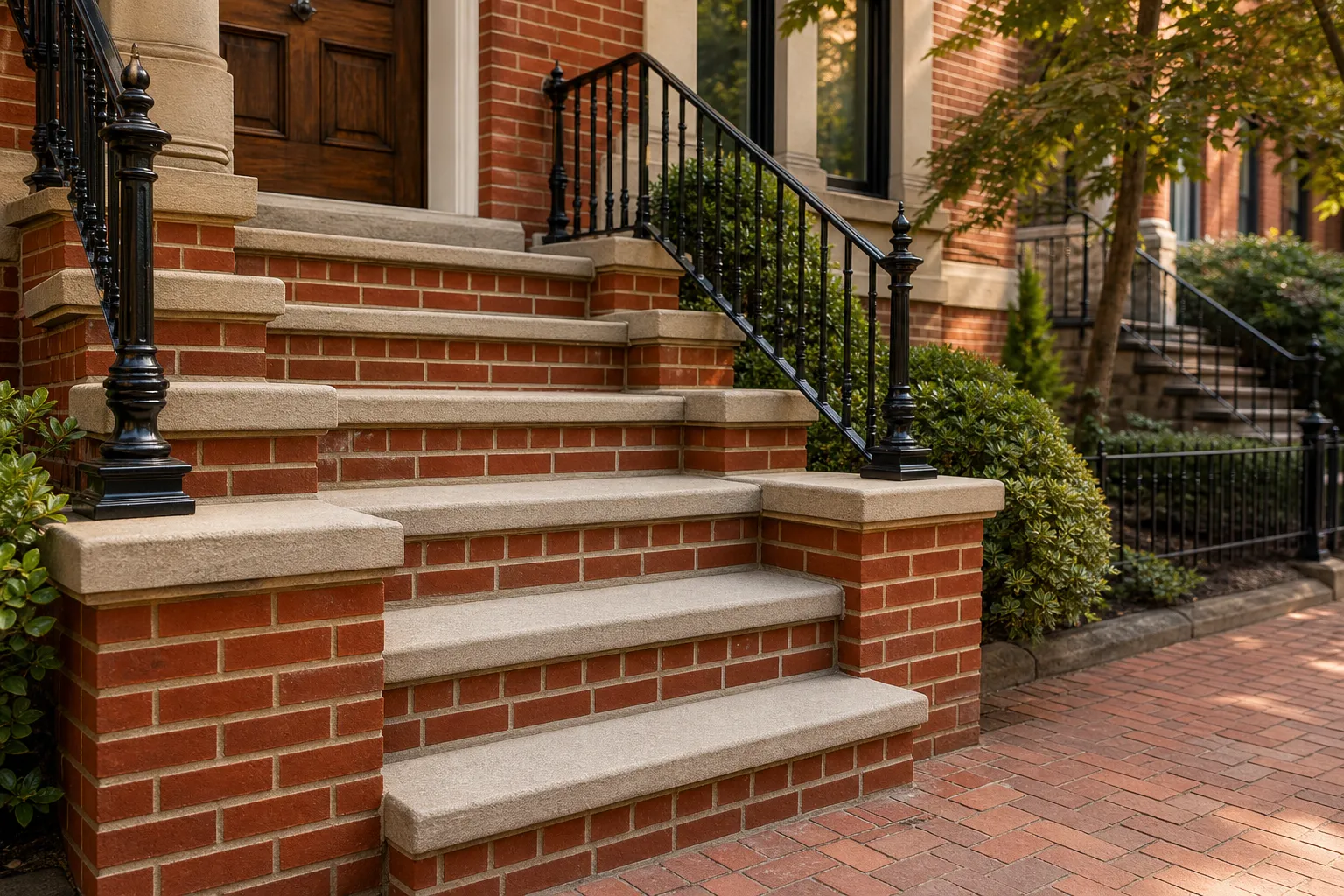
Why Are My Brick Steps Cracking? Common Causes and How to Fix Them in Washington, DC
Brick steps in Washington, DC crack most often because of freeze-thaw cycles, water getting trapped behind or beneath the brick, ground settling, and mortar that has simply worn out with age. DC's climate swings from humid summers to freezing winters, and that repeated expansion and contraction puts constant stress on masonry that was never designed to flex. In most cases, cracked brick steps are repairable through repointing or partial rebuilding rather than a full replacement, but the right fix depends on how deep the damage goes. If you're seeing cracks wider than a quarter inch, loose or wobbling treads, or bricks that shift underfoot, it's worth having a masonry repair DC contractor assess the steps before winter makes the damage worse.
The Most Common Causes of Cracked Brick Steps in DC
DC’s older rowhouses and detached homes, especially in neighborhoods like Capitol Hill, Petworth, and Brookland, tend to have brick steps that are 60, 80, or even over 100 years old. Several forces work against them year after year.
- Freeze-thaw cycles: Water seeps into small cracks or porous mortar joints, freezes and expands, then thaws again. Repeated dozens of times each winter, this slowly widens hairline cracks into structural ones.
- Poor drainage: If water pools at the base of the steps or runs off a roof directly onto them, it saturates the brick and mortar, accelerating deterioration from the inside out.
- Ground settling and shifting soil: DC sits on a mix of clay-heavy and fill soil in many areas, which expands and contracts with moisture. As the ground beneath a stoop shifts, the steps above it crack or separate from the house.
- Original construction quality: Many older DC rowhouses were built with lime-based mortar that is softer than modern portland cement mixes. When repairs are later done with the wrong mortar type, the mismatch causes new cracking.
- De-icing salt: Rock salt used to melt ice on steps accelerates spalling (surface flaking) and can chemically break down mortar joints over several winters.
- Tree roots and vibration: Nearby tree roots can push against a foundation or stoop, and constant foot traffic or nearby construction vibration can worsen existing weak points.
How to Tell If the Cracks Are Serious
Not every crack means your steps are failing, but some signs point to a bigger structural issue rather than routine wear.
- Hairline cracks in the mortar joints only: Usually cosmetic and an easy repointing job.
- Cracks running through the bricks themselves: These suggest movement or pressure from below and typically need more than surface repair.
- Steps that wobble, rock, or sound hollow when stepped on: A sign the structure underneath has failed and needs rebuilding.
- Visible gaps between the steps and the house: Often indicates settling and should be inspected promptly, since it can become a trip hazard.
- Bricks that are crumbling, flaking, or missing chunks (spalling): A sign of long-term water damage that will keep spreading if untreated.
DIY Fixes vs. When to Call a Masonry Contractor
Homeowners can sometimes manage very minor cosmetic issues, like sealing a single hairline crack with a masonry-rated caulk to keep water out temporarily. However, brick steps carry foot traffic and structural load, so most repairs are best left to professionals. Improperly mixed mortar, wrong mortar hardness for historic brick, or a poorly leveled patch can actually cause more cracking within a year or two, costing more to fix later.
A professional masonry repair DC contractor will typically start by removing loose or damaged mortar, checking for water intrusion behind the steps, and confirming whether the underlying structure (often brick, block, or a concrete base) is sound before doing any surface repair.
How Professionals Repair Cracked Brick Steps in Washington, DC
1. Assessment and Diagnosis
A contractor inspects the steps, the mortar joints, and the base to determine whether the problem is cosmetic, drainage-related, or structural. This step prevents wasted money on a repair that won't hold.
2. Repointing Damaged Mortar Joints
For steps where the brick itself is intact but the mortar has cracked or crumbled, repointing (removing old mortar to a consistent depth and packing in fresh, color- and hardness-matched mortar) is the standard fix and typically the most affordable option.
3. Replacing Individual Damaged Bricks
If only a few bricks are cracked or spalling, they can often be cut out and replaced individually with matching brick, especially important on historic DC rowhouses where the original brick color and size need to be matched closely.
4. Partial or Full Step Rebuilding
When the underlying base has failed or shifted significantly, a partial or full rebuild is necessary. This involves removing the damaged section down to solid ground, correcting drainage or grading issues, and rebuilding the steps to match the home's existing brick and mortar style.
Preventing Future Cracking in DC's Climate
Once your steps are repaired, a few habits go a long way toward keeping them intact through DC's freeze-thaw winters and humid summers. Use calcium chloride or sand instead of rock salt in the winter, make sure gutters and downspouts direct water away from the steps rather than onto them, reseal exposed mortar joints every few years, and address any hairline cracks early before water has a chance to get in and freeze. Scheduling a masonry inspection every couple of years, especially before winter, catches small issues while they're still inexpensive to fix.
What Happens If You Ignore Cracked Brick Steps
It's tempting to leave a small crack alone, especially if it doesn't look serious. But brick steps take a beating every single day from foot traffic, weather, and DC's seasonal freeze-thaw swings, and small problems compound quickly. A hairline mortar crack that's ignored for one winter can let in enough water to loosen an entire course of brick by the next spring. Beyond the cost of repair growing over time, cracked or shifting steps are also a liability concern, since a tripping hazard at your front entrance affects mail carriers, delivery drivers, guests, and tenants if you're renting the property. For DC landlords in particular, a damaged front stoop can also raise questions during a property inspection or tenant complaint. Addressing cracks while they're still cosmetic is almost always cheaper than waiting until the steps need a full rebuild, and it protects you from the liability side of the equation as much as the cosmetic one.
Why Local Experience Matters for DC Brick Step Repair
Not every masonry contractor understands the specific building stock found across Washington, DC. Rowhouses in Capitol Hill and Georgetown were often built with different brick sizes, colors, and lime-based mortars than newer construction in areas like NoMa or parts of upper Northwest. A contractor who works regularly in DC will know how to match older brick and mortar hardness so the repair blends in rather than sticking out as an obvious patch. Local experience also means familiarity with DC's Historic Preservation Review Board requirements in designated historic districts, where exterior repairs sometimes need approval before work begins. Choosing a masonry repair DC contractor who already understands these local rules can save you from delays or having to redo work that doesn't meet district guidelines.
Frequently Asked Questions
How much does it cost to repair cracked brick steps in DC?
Minor repointing typically runs a few hundred dollars, while replacing bricks or rebuilding a full set of steps can run into the low thousands depending on size, brick matching needs, and access. Getting a written estimate from a local masonry contractor is the best way to know your specific cost.
Can I repair cracked brick steps myself?
Small hairline cracks can sometimes be sealed temporarily as a DIY job, but full mortar repointing and brick replacement require the right mortar mix, tools, and technique to avoid causing more damage, so most homeowners hire a professional for anything beyond a quick seal.
How long does brick step repair take?
Repointing a set of steps usually takes one to two days including cure time. A full rebuild can take three to five days depending on weather, brick availability, and the extent of the damage.
Are cracked brick steps a sign of foundation problems?
Not always. Most cracked steps result from mortar wear, water intrusion, or minor settling of the soil directly beneath the steps rather than a full foundation issue, but a masonry contractor can rule out deeper structural movement during inspection.
Does DC's weather make step cracking worse?
Yes. Washington DC sees regular freeze-thaw cycles each winter, and that repeated freezing and thawing of trapped moisture is one of the leading causes of accelerated cracking in brick steps and mortar joints.
How do I know if my steps need a full rebuild instead of a repair?
If the steps wobble, sound hollow, have visibly separated from the house, or show cracks running through multiple bricks rather than just the mortar, that typically signals the base has failed and a rebuild is the safer long-term fix.
Can historic rowhouse steps be repaired without changing their appearance?
Yes, an experienced DC masonry contractor can source matching brick and mix mortar to match the original color and joint style, which is especially important in historic districts like Georgetown and Capitol Hill where exterior appearance is often protected.
Get a Free Quote
Talk to a local DC masonry expert about your project — no pressure, no obligation.